

The Lillian Wallace Scholarship Fund
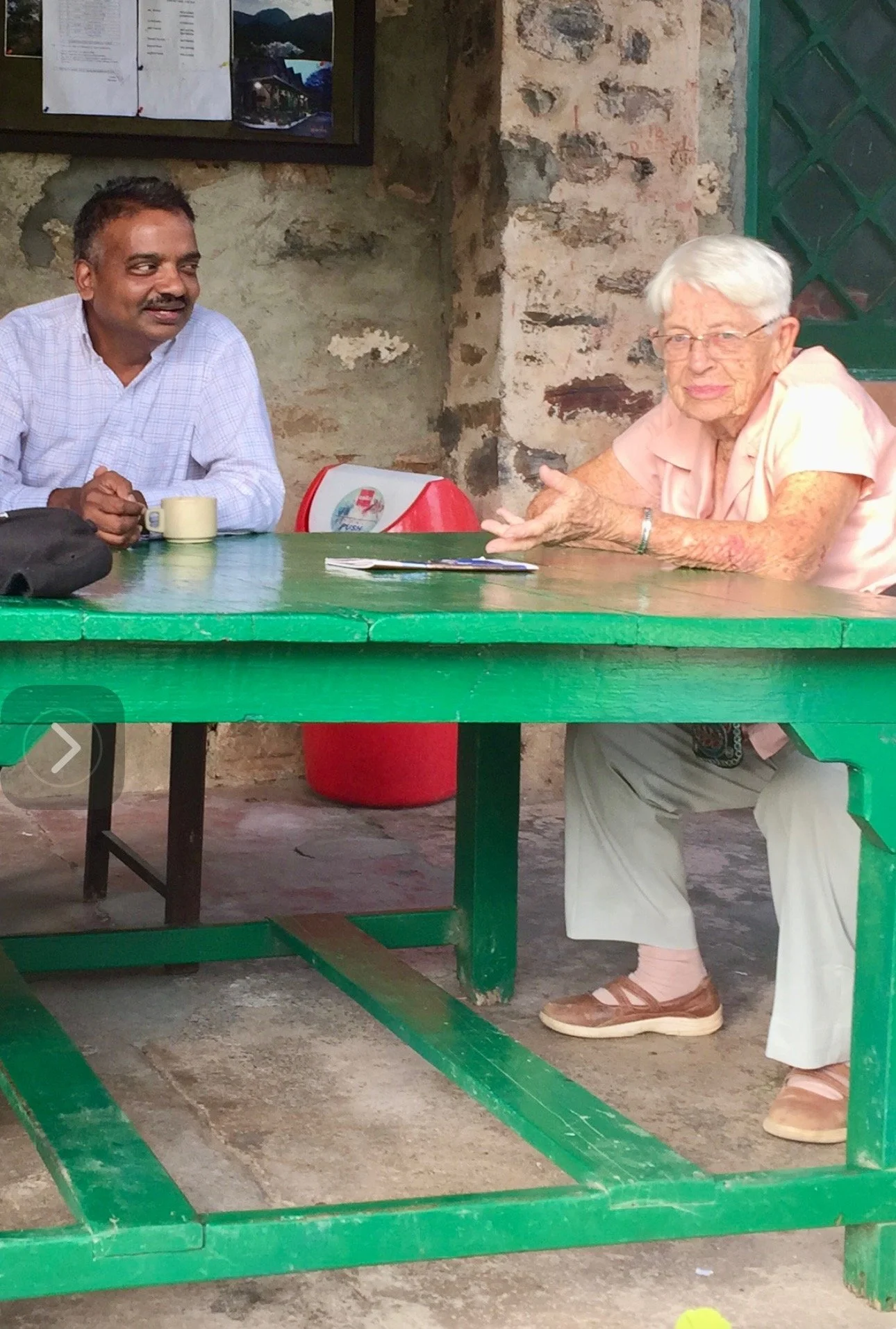
The Lillian Wallace Scholarship Fund was established in honor of a woman whose faith, generosity, and lifelong service helped shape the very beginnings of IMM.
In 1983, when Joel was 18 years old in Hyderabad, India, Lillian Wallace—an American missionary devoted to serving the people of India—wrote the visa recommendation that made his first trip to the United States possible. Decades later, in 2017, Lillian reconnected with Joel and encouraged him to create a medical mission experience that would allow U.S.-based healthcare professionals and students to serve and learn in India. Her vision and encouragement were instrumental in the founding of IMM.
Sister Lillian faithfully served in India from 1956 until her passing in 2021 at the age of 94. The scholarship fund honors her legacy by helping make participation in IMM’s mission experiences more accessible.
Scholarship amounts vary and are reviewed on a case-by-case basis, based on demonstrated financial need and the applicant’s value and contribution to the team. In addition, fundraising opportunities are available to all participants through IMM.
2026 Scholarship Recipients
Share a moment where you realized why you wanted to pursue a career in the medical field?
Shafaq Butar
“I did not realize I wanted to pursue a career in medicine in a dramatic moment of action, but rather in a quiet one defined by restraint. One early morning while working at the urgent care at Overlake Medical Center & Clinics, I checked in a patient named “Rebecca.” The clinic was dim, the hallways were quiet, and the day had just barely begun. As she sat waiting, I noticed her hands gripping the chair while her breathing became shallow and unsteady. She wasn’t speaking, but her body was telling a different story. Rebecca was in the middle of a panic attack.
I felt the instinct to do something. I wanted to say the right words and to fix what I was witnessing, but instead, I stepped away briefly to get her water and returned without urgency or explanation. I sat next to her and waited. Slowly, her breathing eased, and when she was finally called back for her appointment, we exchanged a small, reassuring smile. Nothing about the clinical outcome changed because of me, but something important had shifted. Rebecca felt less alone in a moment of fear.
That encounter clarified something I had been circling for years. Medicine is not only about knowledge or intervention, but it is also about presence, discernment, and the willingness to hold responsibility without needing control. I realized I wanted to be the person accountable not just for recognizing distress, but for deciding how and when to act.
This realization deepened through my work across healthcare settings. As a health coach at Valley Medical Center, I learned that information alone does not create change unless it is communicated in ways patients can understand and trust. In the emergency department at Multicare Covington Medical Center, I saw how sitting with grief could matter as much as any medication. Across these roles, I repeatedly encountered moments where care was defined not by action, but by judgment of knowing when to speak, when to listen, and when to simply stay.
Medicine draws me because it demands that balance in real time, often when the right answer is unclear. Physicians are entrusted with both scientific precision and human vulnerability. They are asked to make decisions that carry weight, often in moments when answers are incomplete, and emotions run high. I am drawn to that responsibility.
Pursuing medicine is not about seeking certainty or authority for me. It is about learning how to carry responsibility ethically and how to translate knowledge into care, how to remain present in discomfort, and how to advocate for patients within complex systems. That quiet morning in the urgent care clinic did not give me a single defining answer, but it clarified the kind of physician I hope to become. The one who understands that meaningful care often begins when we slow down, listen closely, and choose presence over performance.”
Gloris Sajan
“My decision to pursue a career as a Physician Associate developed through a culmination of shadowing and work experiences that refined my interest in medicine. Through shadowing vascular surgery and rheumatology, I observed long-term management of chronic diseases and saw how effective care is best provided through a strategic clinician who balances clinical expertise with patient autonomy. My interest was strengthened more through my role as a transcranial magnetic stimulation therapist, where I administered a neuromodulation therapy to patients suffering from treatment-resistant depression and anxiety. Working with patients in their most vulnerable moments showed me how authentic, patient centered care can lead to better outcomes.
One patient in particular had left an impression on me. She would often arrive frustrated and direct her anger towards the staff. One of my mentors would remind us to never take a patient's outburst personally and instead recognize it as a cry for help. With this perspective, I made an effort to give my patient space to vent, listen without judgment, and sometimes even just sit with her in silence. Throughout the treatment, she gradually began to open up about her personal struggles, the isolation she felt from her community, and her desperate need to get better. I began to realize the power of human connection in medicine. Ultimately, experiences like this shaped my understanding of medicine as a science rooted in human empathy and connection. I hope to make a meaningful difference in patients' lives through compassionate care and advocacy.”